
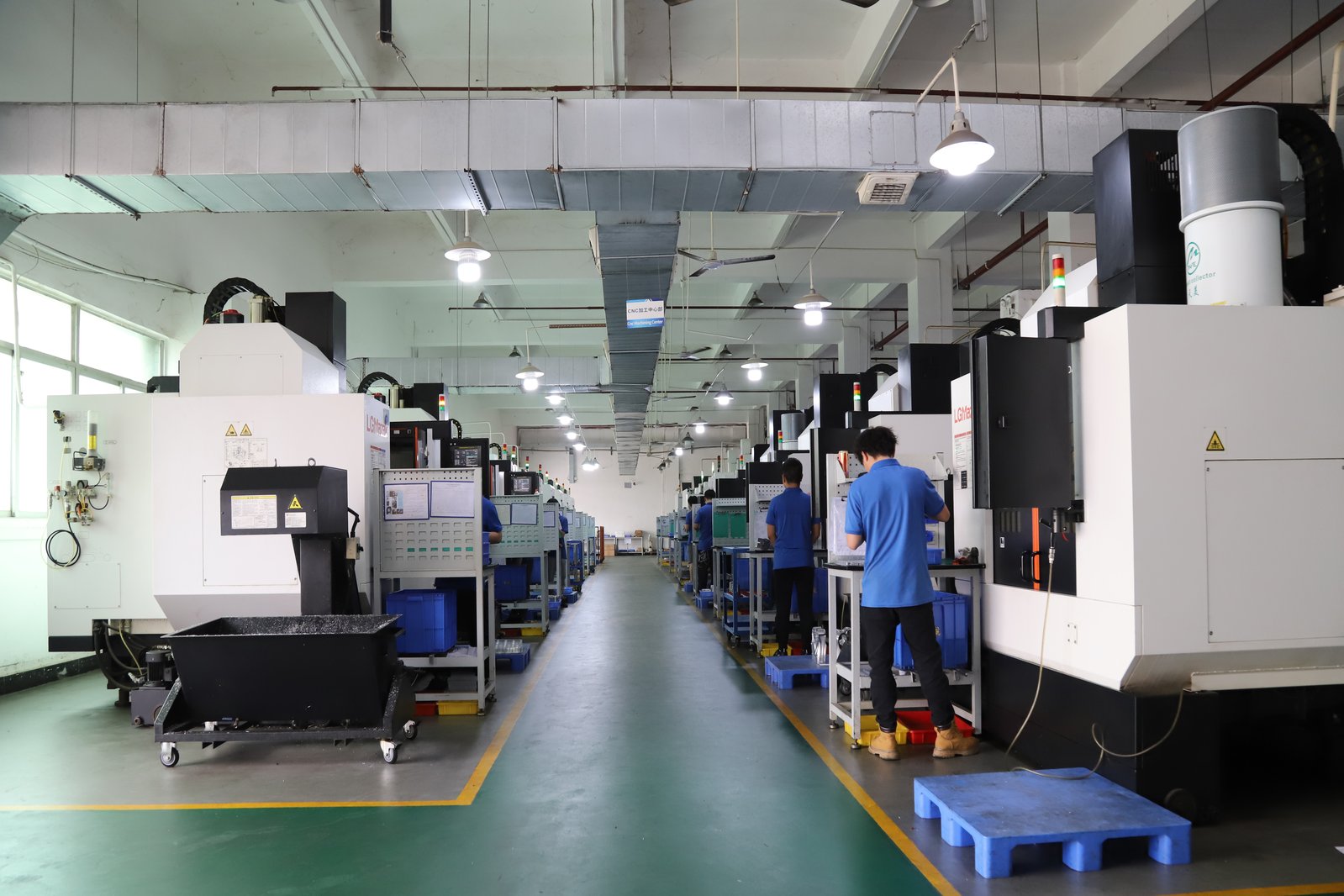
The buyer comparing CNC milling services with alternative processes is not really choosing between machines; they are choosing between supply chains. A milled part arrives from a bar or plate supplier, through one shop, with one quality system and one certificate trail. A cast part arrives from a foundry, through trimming and often machining, with a different trail. A forged part arrives with a microstructure that no other route can copy. Each chain has its own cost structure, its own lead time, and its own risk profile.
The comparison fails when it is reduced to unit price, because unit price assumes the alternatives produce the same part. They do not: a casting at its loose as-cast envelope is not the same part as a milling at ±0.003 mm, and a forging is not a price variant of a milled part when the grain structure is the specification. The honest comparison holds the quality level constant and prices the whole chain, and that is the method this guide applies route by route.
1. What does a milling services chain provide that alternatives assume away?
Milling starts from solid, certified stock and cuts the part from it, and that single fact carries several advantages that comparison tables often forget. The material is the exact wrought grade on the drawing — 6061-T6, 303, 304, 316L, 17-4PH, or titanium — bought with a mill certificate and traceable to a heat. The tolerances hold the tightest practical bands, with milling at ±0.003 mm and grinding beyond it at ±0.002 mm. And the process needs no tooling, so a one-piece order and a five-hundred-piece order share the same per-part economics apart from setup.
What milling gives away is efficiency with material and the ability to reach hidden cavities. Where a part is mostly thin wall and little solid — the classic enclosure — machining cuts away a large fraction of expensive stock, and a forming or casting route starts to look sensible. Where the design carries internal channels that no cutter can reach, machining alone cannot produce the part. Those are real boundaries, and they should be marked on the route map rather than argued about.
The service dimension matters as much as the process dimension. A milling services supplier carries the engineering review, the first article, and the certificate package as part of the transaction, and the parts page of a serious shop shows the range of finished work behind that service. Comparing routes without comparing the service each route includes — tooling engineering for casting, die design for forming, build preparation for printing — underestimates every alternative's true overhead.
2. Where does casting actually win on the cost curve?
Casting wins when its tooling amortizes and its blanks arrive close to final shape. A die-cast housing in aluminum or zinc, produced in the tens of thousands, spreads the die cost across a long run and lands at a unit price that machining cannot match — provided the as-cast part meets the drawing. The smaller and thinner the part, the earlier the crossover, because the die is cheaper and the material saving is larger.
The crossover fails when the casting still needs machining. A sand casting or a die casting with critical faces, datums, or bores must visit a machine after the foundry, and the buyer is then managing two suppliers and two quality systems for one part. The unit cost that matters is casting plus machining plus the transport and risk between them, and that sum erodes the casting's advantage quickly. Price the route, not the foundry's invoice.
Certification is the quiet filter on casting routes. If the drawing names a wrought grade and a certificate, a casting cannot substitute, because the foundry's melt is a different material with a different structure. If the drawing allows a casting alloy, the foundry's own material records stand in. The drawing's material requirement should be read before the volume arithmetic, because it removes the casting route from consideration more often than price does.
3. Why is forging a structural decision rather than a price decision?
Forging is chosen for what it does to the metal: the hammer or press reorients the grain along the part's load paths, producing a structure that bar stock cannot match in a critical component. An aerospace lug, a suspension arm, or a gear blank is forged because the specification demands that structure, and no milling quote can substitute for it regardless of price. Forging decisions belong to the engineering department, not the purchasing spreadsheet.
That said, a forging rarely arrives finished. The die holds the envelope and the grain, but the critical faces — bores, sealing surfaces, datum planes — are machined after forging, and often heat treated between. The real supply chain is forging plus finish machining, and the buyer who quotes only the forging shop is missing half the route. The practical comparison for a forged component is the cost of the full route against the alternative full routes, with the forging's structural requirement as the fixed input.
Buyers should ask the forging route the same questions they ask any supplier: what tolerances the as-forged part holds, what the machining allowance is, where the datum structure will be cut, and what certificates the heat lot carries. A forging without a plan for its finish machining is half a part, and the machining half is where the tight features, the measurement, and most of the schedule risk live.
4. When does sheet forming beat milling, and what does it cost?
Sheet-metal forming is the quiet competitor that comparison tables often omit. A formed enclosure starts as a flat sheet, is cut and bent into shape, and carries very little material cost compared with a solid billet. At volume, a formed part with a set of bends and a painted finish can undercut a milled equivalent by a wide margin, because the milled version cuts away most of its stock as chips.
The boundary is geometry and stiffness. A formed part has thin, consistent walls, generous bend radii, and no thick sections; it cannot hold a tight machined bore or a precise flat datum without reinforcement. Most real designs that look formable end up as formed enclosures with machined inserts or machined flanges, which means the honest route is forming plus some machining plus assembly. The comparison is then formed-plus-inserts against a one-piece milled part, and the one-piece part often wins on tolerance, stiffness, and part count.
Tooling and lead time behave differently in forming. A die or a bending program set has its own cost and its own development cycle, and design changes to a formed part ripple through the tooling. Milling keeps the design door open. For a production buyer, the forming decision belongs to parts with frozen geometry, high volume, and thin-wall envelopes, and even then only after the full route, including the machined features, has been priced.
5. How does additive manufacturing complicate the route map?
Additive manufacturing moved the boundaries in two directions. Geometry that milling cannot reach — internal conformal channels, lattices, organic enclosures — is now producible, and a polymer one-off can exist overnight. Those are genuine wins, and parts with that geometry should be printed. But for ordinary machined geometry, printing competes at a structural disadvantage that marketing copy tends to skip.
A printed metal part carries a layered microstructure, an as-built surface roughness, and a need for support removal, heat treatment, and usually machining of its functional faces. The part that results is not equivalent to a milled part from wrought stock until those steps are done, and once they are done, the buyer has paid for printing plus the same machining the milled route performed alone. The honest comparison is rarely "print versus mill"; it is "print blank plus post-processing versus milled part," and the latter usually wins on total cost for ordinary geometry.
Printing also complicates material assurance. A milled part inherits the mill certificate of a known grade; a printed part depends on powder lot, machine parameters, and build qualification. Where the application demands a wrought-grade material with a certificate, printing does not substitute. Where the application is geometry-limited and the material is acceptable as-built after qualification, printing earns its place. The two cases are different products wearing similar names.
6. Which material behaviors should drive the route decision?
The material column of the comparison is where most route mistakes are made, because buyers compare alloy names without comparing material states. The drawing that names 6061-T6 is not merely asking for aluminum; it is asking for a specific temper produced by the mill and preserved by the process. Machining preserves it. Casting and printing create a different structure from the same alloy, and a part that needs the wrought properties cannot be substituted with a cast or printed lookalike.
Hardness and treatment add a second layer. A part specified in 17-4PH in H1025, or in a hardened tool steel, carries a condition that comes from a specific thermal route, and the process must accommodate it — machining soft and aging afterward, or machining hardened with the right tooling. The condition belongs in the route comparison, because it decides where the heat treatment sits and which suppliers can hold it. The material decision and the route decision are one decision, not two.
Where traceability is a requirement, the route that preserves the certificate chain has the advantage. A milled part is born traceable, through the mill certificate of its stock. A casting must be traced through the foundry's melt records, a forging through its heat lot, a printed part through its powder and build records. Each chain is valid in its own frame, but only the frame the drawing demands should be quoted. The material specification is the first filter of any route comparison, and it removes more candidates than price does.
7. What does the honest total-cost model look like?
Build the model the way an auditor would, because every alternative route has a way to look cheap on the first line. The lines are tooling or programming cost amortized over the lifetime quantity, unit cost at that quantity, every second operation the route requires, inspection and certification at the level the application demands, freight to the same point under the same incoterm, and a line for the risk of design change. The route that wins the model is the route to quote in detail.
Lead time belongs in the model as money. Tooling routes carry a development cycle measured in weeks before the first part exists; printing carries build and qualification time; milling carries programming and first article, which is usually the shortest front end. If the part is needed before a die can be cut, the no-tooling route wins on schedule even where the long-run arithmetic favors tooling. A model that omits the schedule is a model that will be corrected by the calendar.
The last line is the cost of being wrong. A die that must be revised after a design change costs twice; a printed build that fails qualification costs a rebuild; a milled program that changes costs an edit. For a design still converging, the low-commitment route is worth a premium that the spreadsheet should show explicitly rather than absorb silently. Buyers who add this line choose differently, and the difference compounds over the part's life.
8. How do you run a fair side-by-side quote?
A process comparison is only as fair as the inputs it hands each supplier. Send the same drawing, the same function note, the same quality requirement, and the same quantity forecast to every route, and ask each supplier to quote the complete chain to your door. The common errors are the mirror image of each other: giving the machining shop a tight drawing and the casting shop a loose one, or pricing the milled part with full inspection and the alternative without it.
Ask each route three questions before comparing numbers. What does the quoted price include — just the process, or the full chain with finishing and certification? What does the route hold at the drawing's tolerance, and where does it need a follow-on operation to get there? And what is the schedule from order to delivery at your quantity? The answers convert three superficially different prices into three comparable chains, and the comparison then selects itself.
A milling services supplier that knows its route is also the best source of an honest answer when milling is not the right answer. The engineering review on a good RFQ response will say when a casting, a forging, or a print would serve the part better, because a supplier's value is the right route, not the route it happens to sell. The factory behind this site, described on the quality page and the parts page, quotes that way, and the buyer who asks the three questions gets a comparison they can actually decide on.
The buyer's rule of thumb: processes are supply chains, and supply chains are compared on the full route at the same quality level. Price the second operations, keep the tolerance constant, add the schedule and the change risk, and let the arithmetic pick the route.
Frequently Asked Questions
When should CNC milling services carry a part instead of casting or forging?
When the part needs machined tolerances, a wrought material with a certificate, a small or varying quantity, or a design that still changes. Milling requires no tooling investment, so unit cost stays nearly flat from a single prototype to a few hundred pieces, while casting and forging only amortize their tooling at higher volume. The decision is arithmetic, not preference.
How do I find the crossover quantity between milling and die casting?
Divide the tooling investment by the per-part saving the alternative offers, then compare the result with your lifetime quantity. A small housing may cross over in the low thousands; a large part that still needs machined faces may never cross over because the blank saves little. Run the model for your part instead of adopting a universal threshold.
When is a forging the right route despite the price premium?
When the specification requires it — typically for load-bearing parts where the grain structure and integrity of a forging are functional requirements. Forgings almost always need finish machining on critical faces, so the real quote is forging plus machining, and the buyer should manage both steps rather than compare the forging blank with a finished milled part.
Can sheet-metal forming replace a milled part?
Only where the design fits the method: thin, consistent walls, generous radii, and geometry built from bends rather than solid volumes. A formed part cannot hold a tight machined feature or a thick cross-section, so a formed enclosure is often reinforced with machined inserts. Forming wins on material cost at volume and loses where stiffness or precision matters.
When does additive manufacturing beat milling services?
When the geometry cannot be cut — internal channels, lattices, organic shapes — or when an overnight polymer model serves the design review. Metal printing still needs machining on functional surfaces and carries a different microstructure from wrought stock, so for ordinary parts it costs more per unit and adds a process instead of removing one.
Which material properties should drive the route choice?
The properties the application depends on: corrosion resistance, strength-to-weight, hardness after treatment, fatigue behavior, and traceability. Milling from wrought stock preserves the mill's grade, condition, and certificate; casting and printing create their own structures; forging orients the grain. Where the material is a functional requirement, the process that preserves it has the advantage.
What does a fair process comparison actually include?
The full chain at the same quality level: tooling amortized over lifetime quantity, unit cost, every second operation the route requires, inspection and certification, freight at the same incoterm, and the cost of design-change risk. Comparing routes at different tolerances or with one route's finishing omitted is not a comparison; it is a selection of a conclusion.
Should I prototype in the production process or in the fastest process?
Prototype in the production process when that process is available at low volume, and in the fastest process only when the alternative is structurally different. A machined prototype of a part destined for die casting validates the design; a printed model of a machined part validates fit, not process. The sample should share the production route so it teaches the right lessons.
Running a process comparison and need the milled side of it?
Send the model, the function note, and the quantity through the contact page — the review returns the complete milled route with a straight answer on whether another process would serve the part better.