
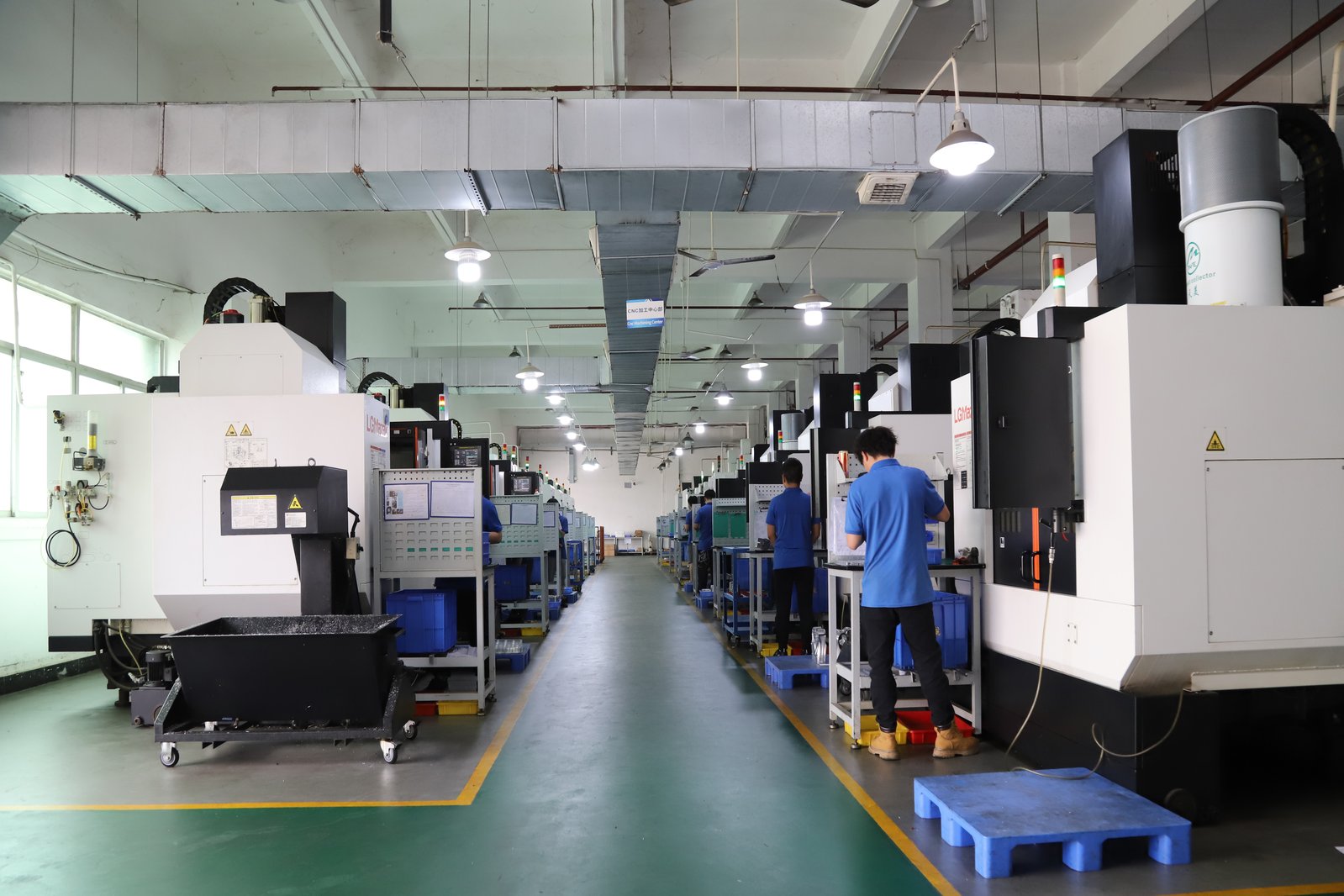
Inside a machine shop, time is not a smooth flow of days; it is a set of windows. There are windows when a particular machine group is open, windows when a coating line runs its batch, windows when the inspection bay has capacity, and weeks on the calendar when the whole floor is light or heavy. A delivery date is meaningful only in relation to those windows, because the same part released a day before a window opens and a day after it closes lands in completely different calendar positions. This guide explains window logic, how a buyer reads a shop's schedule through it, and why releasing orders to match windows is the single most reliable way to get dates that hold.
What is a capacity window and why does it decide my lead time?
A capacity window is a span of time during which a resource is available for new work: a machining center between booked jobs, a grinder with an open day, an anodize line running its weekly batch, a CMM with a free shift. Your order consumes a piece of each window it passes through, and the lead time you are quoted is largely the distance from today to the first open window, plus the work the order does inside that window, plus the gaps between the windows of successive operations. A simple order that fits one machine window is a short order; a route that needs a machine window, then a coating batch, then an inspection slot is a chain of windows, and the chain is only as fast as its slowest gap.
The consequence is that two orders with identical machining content can have very different lead times depending on when they land. One placed on a Monday when the mill is open ships this week; one placed on a Friday after the slot filled ships next week or later, even though the cutting time is the same. Buyers who do not think in windows treat this as inconsistency; buyers who do think in windows see it as the normal arithmetic of a loaded shop. The first step toward dates that hold is to accept that your part waits for windows, not for days.
How do I know which window my order will fit into?
The question that reveals the schedule is not "how long will it take" but "which windows does my part need, and when are they open?" For a typical milled part the answer involves the machine group that runs it, and a shop can tell you what is booked on that group, when the next slot opens, and how long your order occupies it. If the route carries finishing, a coating batch or a grinding step, the same question applies to those resources, because each has its own cadence. A part whose route stays inside one machine group moves fastest; one that crosses between groups inherits the gap between their windows.
The shop's answer also tells you how to watch the order. If your order is waiting for the machine window, the event that matters is the machine becoming free; if it is waiting for a coating batch, the event that matters is the batch date. A weekly update that says which window the order is approaching is a real update; one that says "in process" without a window is not. Buyers who track their orders by window can predict slips before they happen, because a window that is slipping is visible a week before the ship date is.
Watch, too, for the difference between a window that is real and a window that is a placeholder. A shop that quotes a slot on a machine it actually controls, with the material on its way and the program ready, is quoting a window it can deliver. A shop that quotes a slot that depends on a material order not yet placed, a program not yet written, or a subcontractor's date not yet confirmed is quoting a placeholder, and placeholders move. The question that separates the two is simple: what has to be true for my window to hold, and is each of those things already true? The buyer who asks it at the quote gets a date with its conditions attached; the buyer who does not ask it gets the same date with the conditions hidden inside it.
Should I hold several parts and release them together?
Because setup and program preparation are paid once per release, a window that is filled with several related parts is cheaper and faster per part than several windows each holding one small order. A shop can justify giving a batch priority treatment when the batch is worth the setup; a single small part dropped into an otherwise full window is often fitted around other work and its finish date slides accordingly. Releasing a handful of related parts together — same material, same machine group, same finishing route — lets the shop treat the group as one scheduling unit and gives you one combined delivery instead of several staggered ones.
The trade is inventory and timing. A combined release only makes sense when your consumption can absorb the parts arriving together, and when the parts genuinely share a process; grouping parts that need different machines does not fill one window, it fills several. The scheduling question to ask is simple: which parts can ride the same route? The answer defines the natural batch, and releasing natural batches into the windows that fit them is how a regular buyer turns a sequence of small uncertain orders into a rhythm of predictable ones.
Why did my order miss the window the quote implied?
The most common source of a missed window is something upstream moving after the quote was given. The material arrived a day late, so the order was not ready when the machine slot opened and the slot was filled by another job that was ready. A clarification on the drawing delayed the program, and the order slipped past its window. A higher-priority order — often one that is late and has already slipped once — took the slot and your order moved. In a window-based schedule these movements are normal, and the quality of the shop shows in how it handles them.
A good shop tells you the moment your order loses its window, names the window it moved to, and explains why. A poor shop absorbs the slip silently and you discover it when the ship date arrives without parts. The buyer's protection is to make window reporting part of the order: ask which window the order targets, and ask to be told immediately if it moves. The difference between a date that holds and a date that surprises is usually not the shop's machines but its willingness to report window changes while there is still time to act on them.
How does expediting work inside a window schedule?
Expediting is the act of moving your order into a window it did not previously have, and in a loaded shop that is possible only because some other order moves out of that window. The honest expedite conversation therefore has two parts: what your order needs to jump, and whose order absorbs the jump. A shop that can name both is running a real schedule; one that simply promises "we will rush it" is either running slack it should have admitted or will silently displace someone else's work — possibly yours, on the next order.
The other side of expediting is timing. A shop that knows an expedite is coming before the schedule is locked can usually find the window; one that is asked after the parts are already in the queue can only reshuffle, and reshuffling late is where mistakes happen. The buyer's discipline is to flag critical dates at the quote stage and to pay for the priority honestly rather than demanding it at the ship date. On a window-based schedule, priority is a resource that has to be bought and booked like any other, not a mood the shop can conjure on request.
Window logic also explains the strangest pattern buyers see on late orders: the part that was ready early and still shipped late. A milled part finished ahead of its window waits for the next available finishing batch, the next inspection slot or the next freight pickup, because each leg of the route runs on its own cadence and none of them starts early just because the previous leg finished early. The gap between a part being machined and a part being shipped is not idle time the shop is wasting; it is the seams between windows that the route crosses. Naming those seams at the quote — "machined by this date, coated by the next batch date, released after inspection on this date" — is what turns a route of windows into a delivery date a buyer can actually schedule against.
How far ahead should I place an order to get the window I want?
Shops reserve windows for work they can see. A committed order with a purchase order reserves its slot; an inquiry with no order reserves nothing; and a forecast reserves capacity softly, enough for the shop to plan machines and order material in anticipation. The practical rule is to place committed orders as far ahead as your own schedule allows, and to share a rolling forecast for repeat parts so the shop can hold windows open for the releases you expect. The forecast is not a commitment to buy; it is a commitment to communicate, and communication is what lets a shop protect capacity for your program.
The late-order penalty is the mirror of this. An order placed a week before it is needed takes whatever window is left at that moment, which is why last-minute orders so often land exactly where the buyer cannot afford them to land. If your program is genuinely sporadic, the honest planning answer is to hold a small buffer in your own stock or to accept a longer standard lead time for the sporadic parts, rather than to expect a window-based shop to conjure capacity that is already sold. Capacity is booked in advance by the buyers who plan; the rest take what remains.
What information lets the shop quote my window accurately?
Window quoting runs on five inputs, and a buyer who provides them gets a date the shop can stand behind. The first is the machine group the part needs, which the shop can read from the geometry. The second is the material and whether it is in stock, because material has its own window. The third is the finishing route, because each finishing step has its own cadence. The fourth is the quantity, which decides how much of the machine window the order consumes. The fifth is your intended release date, because the distance from release to window is what the quote is really measuring.
A buyer who sends those five answers at once is giving the shop what it needs to check its book instead of estimate from habit, and the date that comes back is one the shop has actually looked at. A buyer who sends a bare model and asks for a lead time is asking the shop to invent a schedule without its calendar in front of it. The five inputs cost minutes to assemble and save the weeks that misquoted windows generate. For how the shop builds routes across its machine groups, the quality page on this site explains the metrology windows in the route, and the parts guide shows how geometry translates into the machine groups an order needs.
Frequently Asked Questions
What is a capacity window and why does it decide my lead time?
A capacity window is a span when a machine group, finishing line or inspection bay is open for new work. Your lead time is the distance to the next open window plus the work the order does inside it. An order that lands just before a window opens runs sooner than one that lands just after it closes, even with identical machining content.
How do I know which window my order will fit into?
Ask the shop to name the machine group your part needs, what is booked on it, and when the next open slot falls, and ask the same for any finishing or grinding step in the route. A shop that answers in windows is running a real schedule; one that answers only in days is quoting without its book.
Should I hold several parts and release them together?
Often yes. Releasing a small batch of related parts in one window amortizes setup and program preparation across them, and the batch earns scheduling priority a single small order does not. Release together when the parts share a process and your consumption can absorb the combined lot.
Why did my order miss the window the quote implied?
Usually because something upstream moved: material arrived late, a clarification delayed the program, or a higher-priority order took the slot. Window-based shops re-slot displaced work, and the honest ones tell you which window your order moved to and why, the moment it happens.
How does expediting work inside a window schedule?
An expedite moves your order into a window it did not have, which means another order moves out of it. The shop can usually do this if it knows before the schedule is locked. The honest question is what the expedite displaces and when; a shop that expedites everything eventually has no windows at all.
How far ahead should I place an order to get the window I want?
As far ahead as your schedule allows, with a rolling forecast if the part repeats. Shops reserve windows for committed orders and visible pipelines; a last-minute order takes whatever window is left. The forecast reserves capacity without committing you to buy.
What information lets the shop quote my window accurately?
The machine group, the material and its stock status, the finishing route, the quantity, and your intended release date. With those five answers the shop can check its windows instead of guessing; without them the date is an estimate wearing the clothes of a promise.
Want a quote that names the window your order will land in?
Email the STEP or IGES model with material, finish, quantity and target release to [email protected] or call +86 13126536955, and receive the machine-group window, the finishing cadence and the slot your order fits.